
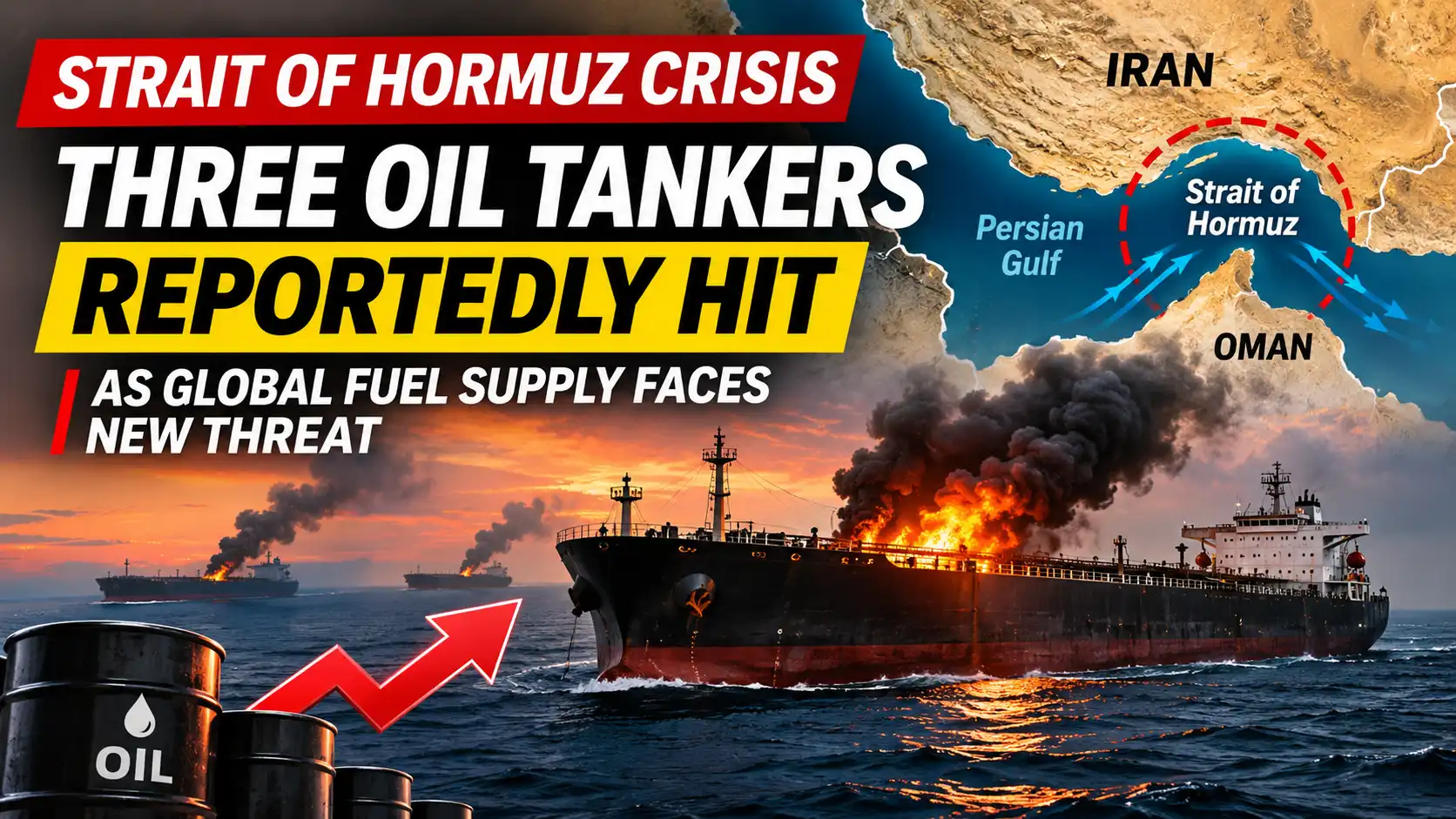
Reports that three oil tankers have been struck amid escalating tensions surrounding the Strait of Hormuz have raised fresh concerns over global energy security, international shipping, crude oil prices, and the potential economic consequences of a prolonged disruption in one of the world’s most important maritime trade routes.
The developing situation could have far-reaching consequences for oil-importing countries, including the Philippines, where higher international petroleum prices could translate into increased fuel costs, transportation expenses, electricity rates, and inflation.
However, the circumstances surrounding the reported tanker incidents, including responsibility and the extent of the damage, require independent verification.
Three Oil Tankers Hit in the Strait of Hormuz
The United Kingdom Maritime Trade Operations (UKMTO) issued a revised maritime security warning on November 24, confirming that an incident initially reported as a single attack had been reclassified as three separate attacks involving oil tankers.
All three vessels continued their voyages, and their crew members were accounted for. However, the extent of the damage and any potential environmental impact remain unknown. ukmto.org
Maritime industry publications identified the three vessels as:
- Bahrain Prosperity
- Cameroon Prosperity
- Romania Prosperity
The vessels are Liberia-flagged Very Large Crude Carriers (VLCCs) associated with South Korean shipping company Sinokor. maritime-executive.com
Iranian military authorities claimed that tankers had struck naval mines after violating shipping restrictions. However, these claims have not been independently corroborated, and maritime security authorities have reported strikes involving unidentified projectiles.
The incidents represent another escalation in the ongoing maritime security crisis affecting commercial shipping in the Middle East.
Where Is the Strait of Hormuz?
The Strait of Hormuz is a strategically important maritime passage between Iran and Oman, connecting the Persian Gulf to the Gulf of Oman and providing access to international energy markets. Explore the interactive map below.
© TheDailyCaffeine.com | Global Energy Watch
The Strait of Hormuz is a narrow maritime passage separating Iran from the Arabian Peninsula. It connects the Persian Gulf to the Gulf of Oman and the Arabian Sea, providing access to international markets.
Major energy-producing countries depend on this passage to export crude oil, refined petroleum products and liquefied natural gas (LNG).
These countries include Saudi Arabia, Iraq, Iran, Kuwait, Qatar, Bahrain and the United Arab Emirates.
Although some producers have alternative pipeline infrastructure, available bypass routes cannot fully replace the volume of energy normally transported through the strait.
Why the Strait of Hormuz Is Critical to Global Oil Supply
According to the International Energy Agency (IEA), the Strait of Hormuz handled approximately 20 million barrels of crude oil and petroleum products daily in 2025, before the current crisis intensified.
Strait of Hormuz: Key Energy Statistics
The waterway accounts for approximately one-quarter of global oil trade transported by sea under normal conditions. Any prolonged disruption could create supply shortages, increase shipping costs and put upward pressure on international energy prices. IEA
Strait of Hormuz Shipping Traffic Remains Severely Disrupted
Commercial shipping activity through the Strait of Hormuz remains significantly below historical levels as shipping companies navigate heightened security risks.
According to maritime industry reporting citing the Joint Maritime Information Center (JMIC), daily vessel movements averaged approximately 138 in 2025. Recent US-facilitated crossings averaged substantially fewer vessels.
Strait of Hormuz Vessel Movements
Despite improvements in facilitated shipping movements, restoring normal commercial activity remains a major challenge.
Shipping companies face increasing operational risks, potential delays, higher insurance premiums and uncertainty over the safety of their crews.
Oil Prices Rise as Markets React to Tanker Attacks
Global oil markets have responded to renewed security concerns surrounding the Strait of Hormuz.
Reuters reported on November 24 that oil prices settled approximately $2 higher as traders assessed the continuing attacks on commercial shipping.
Brent crude was also reported trading around $91 per barrel on Tuesday, according to maritime industry reporting. Reuters+1
However, attacks on individual tankers do not automatically result in a major global supply shortage. Oil prices are also influenced by production levels, commercial inventories, global demand and the availability of alternative energy supplies.
A sustained interruption of oil exports would likely have a more significant impact than isolated shipping incidents.
What Happens if the Strait of Hormuz Is Fully Blocked?
A complete and prolonged closure of the Strait of Hormuz could trigger a major international energy crisis.
The consequences would extend beyond the oil industry, affecting manufacturing, transportation, agriculture, aviation and international trade.
| Sector | Potential impact |
|---|---|
| Crude oil | Higher international prices and supply constraints |
| Gasoline and diesel | Increased retail fuel prices |
| Aviation | Higher jet fuel costs and potential fare increases |
| Maritime shipping | Increased insurance and freight charges |
| Electricity | Higher generation costs in fuel-dependent markets |
| Manufacturing | Rising production and logistics expenses |
| Food | Higher agricultural and distribution costs |
| Global economy | Inflationary pressure and slower growth |
The severity of these effects would depend on how long the disruption lasts and whether alternative supply sources can compensate for lost exports.
How an Oil Supply Crisis Affects the Economy
What the Strait of Hormuz Crisis Means for the Philippines
The Philippines is particularly vulnerable to international oil market disruptions because of its dependence on imported petroleum products.
Unlike major oil-producing countries, the Philippines has limited domestic petroleum production and relies heavily on international suppliers to meet transportation, industrial and commercial energy requirements.
Higher Gasoline and Diesel Prices
If international petroleum prices continue to rise, Philippine oil companies could implement additional fuel price increases.
Motorists, public utility vehicle operators, delivery companies and logistics businesses would be among those most directly affected.
Rising Food Prices and Inflation
Higher diesel prices increase the cost of transporting agricultural products from farms to markets.
Businesses may pass these additional expenses on to consumers, contributing to higher prices for rice, vegetables, meat, fish and other essential commodities.
Persistent fuel price increases could also complicate efforts by the Bangko Sentral ng Pilipinas (BSP) to manage inflation.
Higher Electricity Costs
The Philippines could experience additional electricity price pressures as international energy costs rise.
Oil-fired power generation and imported LNG are particularly exposed to international fuel market volatility, although electricity rates also depend on existing supply contracts and the country’s overall energy mix.
Impact on Overseas Filipino Workers
The continuing conflict also presents potential safety and employment concerns for overseas Filipino workers in the Middle East.
Filipino seafarers face particular risks because of their significant participation in the global maritime workforce.
Philippine authorities may need to strengthen coordination with shipping companies, foreign governments and international maritime organizations to protect affected Filipino workers.
How Much Could Higher Fuel Prices Cost Filipino Motorists?
The following interactive calculator illustrates the potential additional monthly fuel expenses for Philippine motorists if domestic pump prices increase.
Philippine Fuel Price Impact Calculator
Find out how potential gasoline and diesel price increases could affect your monthly and annual fuel expenses.
Monthly Fuel Expense Comparison
© TheDailyCaffeine.com
Can Alternative Oil Routes Prevent a Global Energy Crisis?
Several Middle Eastern countries have invested in energy infrastructure designed to reduce their dependence on the Strait of Hormuz.
Saudi Arabia operates an oil pipeline connecting its eastern oil-producing region to the Red Sea. The United Arab Emirates also has pipeline infrastructure that allows some crude oil to reach export facilities outside the strait.
Other potential responses include releasing strategic petroleum reserves, increasing production outside the Persian Gulf, diversifying energy suppliers and accelerating renewable energy development.
However, these measures have limitations. Existing alternative infrastructure cannot immediately replace all the oil and natural gas normally transported through the Strait of Hormuz.
Environmental Risks From Oil Tanker Attacks
Beyond the economic consequences, attacks on oil tankers raise significant environmental concerns.
A major oil spill could damage marine ecosystems, fisheries, coastal communities and desalination facilities throughout the Persian Gulf and surrounding waters.
The region contains important coral reefs and marine habitats while supporting coastal economies that rely on fishing and international commerce.
As of the latest UKMTO advisory, the environmental impact of the three tanker incidents remained unknown. There is no basis yet to conclude that the incidents caused a major oil spill.
What Happens Next in the Strait of Hormuz Crisis?
International energy markets will closely monitor developments over the coming days.
Several factors could determine whether the situation improves or develops into a broader energy crisis:
- Further attacks against commercial vessels.
- Diplomatic negotiations involving Iran and the United States.
- International maritime security operations.
- Changes in crude oil and LNG export volumes.
- Decisions by major oil-producing countries.
- Potential deployment of strategic petroleum reserves.
- Changes in shipping insurance costs and commercial traffic.
The latest tanker incidents demonstrate that the security of international energy shipments remains uncertain despite efforts to maintain commercial navigation.
Frequently Asked Questions
Were three oil tankers attacked in the Strait of Hormuz?
Yes. UKMTO revised its maritime security warning on November 24, 2026, to recognize three separate attacks. All crew members were accounted for, while damage assessments remained incomplete.
How much of the world’s oil passes through the Strait of Hormuz?
Approximately 20 million barrels of oil and petroleum products passed through the strait daily in 2025, representing around 25% of global seaborne oil trade.
Will the Strait of Hormuz crisis increase fuel prices in the Philippines?
It could. Sustained increases in international crude oil and refined petroleum prices may lead to higher domestic gasoline, diesel and kerosene prices. However, future Philippine pump price adjustments are not yet established by these incidents alone.
Who controls the Strait of Hormuz?
Iran and Oman border the strait. International law provides transit passage rights through qualifying international straits, although maritime access has become increasingly contested during the current conflict.
Can the world survive without oil shipments through Hormuz?
Alternative supplies, pipelines and strategic reserves could partially offset disruptions. However, a prolonged closure would place substantial pressure on global energy markets.
Is the Strait of Hormuz completely closed?
Recent maritime reports indicate that some commercial vessels continue to cross the waterway, although shipping activity remains severely disrupted.
Conclusion
The reported attacks on three oil tankers in the Strait of Hormuz have renewed concerns about the stability of global energy supplies.
While the vessels continued their voyages and no missing crew members were reported, the broader maritime crisis remains a serious threat to international shipping and economic stability.
For the Philippines, continued instability in the Middle East could translate into higher transportation costs, rising consumer prices and additional inflationary pressure.
The coming weeks will be critical in determining whether diplomatic and maritime security efforts can restore reliable shipping operations or whether the global economy must prepare for a prolonged energy supply disruption.
Sources and references
- UK Maritime Trade Operations – Official Warning 219-26, Update 001
- Joint Maritime Information Center – November 22 Advisory
- International Energy Agency – Strait of Hormuz Factsheet
- Reuters – Oil Prices Rise Amid Continued Hormuz Ship Attacks
- The Maritime Executive – Three Tankers Hit in Strait of Hormuz
- gCaptain – Four More Ships Attacked