
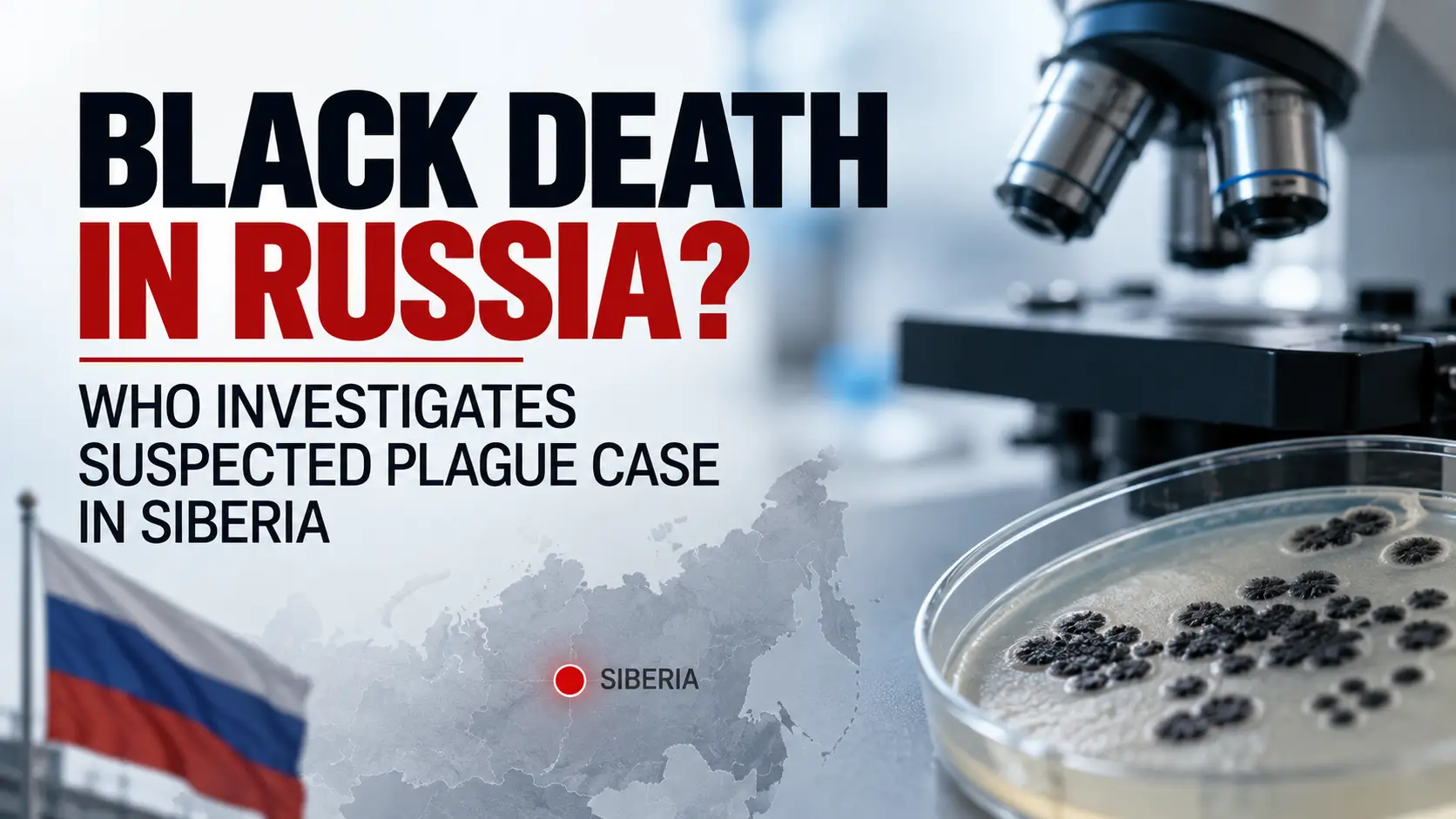
A mysterious death at a Russian laboratory specializing in dangerous infectious diseases has raised international concern over the possible reappearance of pneumonic plague—the deadly form of the disease associated with the medieval Black Death.
A 28-year-old laboratory worker died in Siberia on October 2, 2026, after developing pneumonia of an undetermined origin.
Russian authorities responded by placing approximately 200 people under precautionary quarantine and conducting thousands of laboratory tests.
The incident quickly attracted international attention, with the World Health Organization (WHO), European health authorities, and the United States seeking more information about the circumstances surrounding the death.
But despite alarming headlines and speculation circulating online, there is no confirmed pneumonic plague outbreak in Russia as of October 8, 2026.
Here is what has been established, what remains uncertain, and whether people in the Philippines should be concerned.

What Happened at Russia’s Anti-Plague Laboratory?
The incident involved Darya Shipilova, a 28-year-old employee of the Irkutsk Anti-Plague Research Institute of Siberia and the Far East.
The institute, established in 1934, studies and monitors dangerous infectious diseases, including plague, cholera, and anthrax.
Shipilova died on October 2 after suffering from pneumonia whose cause had not been determined.
Because she worked at a facility handling dangerous pathogens, Russian authorities introduced precautionary public-health measures.
Approximately 200 people who had been in contact with her were initially quarantined or placed under medical observation.
The unusual circumstances prompted speculation that she might have contracted pneumonic plague.
However, Russian authorities have not confirmed that plague caused her illness.
Latest Update: Russia Denies a Second Infection
On October 8, Russia’s public-health regulator, Rospotrebnadzor, denied reports circulating online that another person had become ill after contact with the deceased laboratory worker.
The agency reported that:
- Nearly 5,000 laboratory tests had been conducted.
- No dangerous pathogenic microorganisms had been detected among tested contacts.
- No confirmed plague cases had been identified in the region.
- Precautionary measures were being wound down.
- Authorities considered the risk of an epidemic to be absent.
Earlier reports indicated that approximately 90% of those initially quarantined had already been released.
These statements are official Russian government claims about the investigation.
They do not establish the exact cause of Shipilova’s death, which remains unexplained in publicly available reporting.
Why Is the World Health Organization Concerned?
The WHO has requested additional information from Russia about the laboratory worker’s death and reports suggesting a possible second unexplained pneumonia case.
The international health agency wants clarification about the cause of illness, potential exposure, and the public-health response.
The concern is understandable.
A laboratory specializing in dangerous pathogens experienced an unexplained fatal illness, followed by extensive precautionary measures.
That combination warrants investigation even when a specific infectious disease has not been confirmed.
The WHO has emphasized the importance of timely and transparent information sharing.
Its request for additional information should not be interpreted as confirmation of a plague outbreak.
What Is the Black Death?
The Black Death was one of the deadliest pandemics in human history.
During the 14th century, plague spread across Europe and other regions, causing tens of millions of deaths.
The disease is caused by a bacterium called Yersinia pestis.
It is commonly associated with rodents and fleas, although some forms of plague can also spread through respiratory droplets.
The historical Black Death is estimated to have killed more than 50 million people in Europe.
However, the disease is not extinct.
Plague continues to occur naturally in some parts of the world, including areas of Africa, Asia, and the Americas.
Modern antibiotics have dramatically changed the outlook for patients when treatment begins promptly.
What Is Pneumonic Plague?
Pneumonic plague is the form of plague that infects the lungs.
It is considered the most dangerous form because it can progress rapidly and, under certain conditions, spread between people through infectious respiratory droplets.
Symptoms can include:
- Sudden fever and chills
- Severe weakness
- Headache and body aches
- Cough
- Chest pain
- Difficulty breathing
- Occasionally, bloody sputum
The illness can become life-threatening quickly without appropriate treatment.
However, pneumonic plague can be treated with antibiotics, particularly when diagnosed and treated early.
It is not equivalent to an untreatable medieval disease.
Bubonic Plague vs Pneumonic Plague: What’s the Difference?
There are three major clinical forms of plague.
Bubonic Plague
This is the most common form.
It typically develops after a bite from an infected flea and causes painful swelling of lymph nodes, known as buboes.
Pneumonic Plague
This form affects the lungs and can spread through infectious respiratory droplets during close contact.
It requires urgent medical attention.
Septicemic Plague
This occurs when plague bacteria multiply in the bloodstream.
It can cause severe systemic illness and complications.
All three forms are serious, but early medical treatment substantially improves the chance of recovery.
Did a Laboratory Accident Cause the Death?
Unverified reports have suggested that Shipilova may have accidentally broken a laboratory container holding dangerous bacteria.
Other rumors suggested that she became infected during travel.
None of these explanations has been established by publicly available evidence.
Russian health authorities have rejected claims linking her illness to a laboratory accident.
The fact that someone works in a laboratory studying dangerous pathogens does not, by itself, establish that a laboratory exposure occurred.
Determining the actual cause requires reliable medical, laboratory, and epidemiological evidence.
Until those findings are available, claims about a laboratory leak or deliberate biological release remain speculative.
What Are European Health Authorities Saying?
The European Centre for Disease Prevention and Control (ECDC) announced on October 6 that it was closely monitoring the situation.
Based on the limited information available at that time, the agency reported no secondary cases and no evidence of sustained human-to-human transmission.
The ECDC also explained that transmission of pneumonic plague generally requires close and prolonged contact with an infected person who is already symptomatic.
European authorities emphasized that effective antibiotic treatment is available.
The agency is continuing to coordinate with WHO Europe as additional information becomes available.
Could This Become Another Pandemic?
There is currently no evidence supporting claims that the incident represents the beginning of another pandemic.
Several important facts should be considered.
First, the original illness has not been confirmed as plague.
Second, Russian authorities report no detected plague cases among the contacts investigated.
Third, European health authorities have found no evidence of sustained transmission.
Fourth, pneumonic plague is a known bacterial infection with established antibiotic treatments and public-health control measures.
That does not mean unexplained infectious illnesses should be ignored.
It means the available evidence does not justify claims of an emerging global outbreak.
Should the Philippines Be Worried?
For Filipinos following international health developments, the most important distinction is between a suspected disease event overseas and an established threat to public health in the Philippines.
As of October 8, the publicly available reports reviewed for this article do not establish a plague outbreak in Russia or transmission to the Philippines.
There is therefore no evidence from this incident that ordinary Filipinos need to change their daily activities.
Nevertheless, the Department of Health and relevant international public-health agencies remain the appropriate sources for official travel or health advisories.
If a confirmed international outbreak were to develop, official risk assessments would need to consider the location, transmission patterns, travel connections, and effectiveness of containment measures.
For now, the appropriate response is to follow verified health information rather than alarming social-media claims.
Why the Incident Has Attracted So Much Attention
Several factors explain the intense international interest.
The first is the location: a research institute that specializes in plague and other dangerous pathogens.
The second is the unexplained cause of death.
The third is the scale of precautionary measures taken after the incident.
And the fourth is the continuing uncertainty surrounding publicly available information.
Memories of the COVID-19 pandemic have also increased public sensitivity to reports of unusual pneumonia cases.
However, similarities in public concern do not establish similarities in disease transmission, severity, or outbreak potential.
The investigation must be assessed on its own evidence.
Frequently Asked Questions
Has the Black Death returned to Russia?
There is no confirmed plague outbreak linked to the Siberian laboratory worker’s death as of October 8, 2026.
Did the Russian laboratory worker die from pneumonic plague?
The cause of her pneumonia remains undetermined in public reporting. Russian authorities have not confirmed plague as the cause.
Has a second person been infected?
Russian authorities denied reports of a second infection on October 8. The WHO had requested clarification after media reports suggested another possible case.
Can pneumonic plague spread from person to person?
Yes. Confirmed pneumonic plague can spread through infectious respiratory droplets during close contact with a symptomatic patient.
Is pneumonic plague curable?
It is treatable with appropriate antibiotics. Prompt diagnosis and treatment are critical.
Is there a plague outbreak in the Philippines?
The Russian incident does not establish an outbreak in the Philippines. Readers should consult the Philippine Department of Health for official local disease surveillance updates.
Could plague cause another pandemic?
Plague can cause outbreaks and is a serious infectious disease, but the current Russian incident does not provide evidence of a developing pandemic.
The Bottom Line
The mysterious death of a laboratory worker in Siberia deserves serious investigation and transparent reporting.
But there is an important difference between an unexplained death at a plague research facility and a confirmed outbreak of the Black Death.
As of October 8, 2026, the cause of the worker’s pneumonia remains unresolved.
Russia says extensive testing has not identified plague among the people investigated, while international health authorities continue seeking clarification.
For now, there is no verified evidence of a new Black Death outbreak or a global public-health emergency arising from this incident.
The most important development to watch is whether further investigation establishes the cause of death—and whether independent public-health authorities can verify the findings.
The Daily Caffeine will continue following official updates from the WHO, European health authorities, and credible international news organizations.