

The Philippines marked a major energy milestone on November 5, 2026 after Malampaya Phase 4 delivered its first gas, bringing new domestic supply into one of the country’s most important power assets.
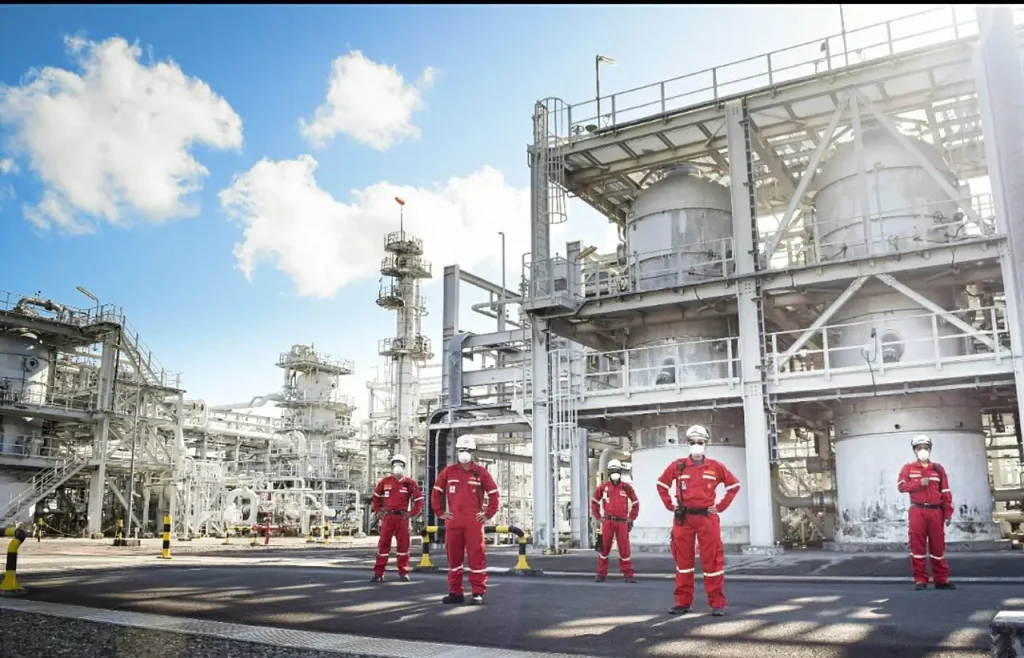
According to the project operator, gas from the new Malampaya East-1 and Camago-3 wells has now entered the existing Malampaya production system. President Ferdinand Marcos Jr. attended the ceremonial first gas event at the Malampaya Onshore Gas Plant in Batangas City, where he framed the development as part of the country’s push to strengthen energy security and reduce dependence on imported fuel.
The operator announced the milestone in a November 5 statement published on its official website. It said Phase 4 was completed 27 months after final investment decision and about five months ahead of its original schedule, following an investment of close to $1 billion. The company’s full announcement is available here.
Why Malampaya Phase 4 matters
This development matters because Malampaya has long been a major indigenous source of fuel for power generation in Luzon. The operator said the project has supported about one-fifth of Luzon’s electricity requirements since commercial operations began in 2001.
For Filipino households and businesses, the practical issue is not the ceremony itself but whether more domestic gas can help steady supply and limit exposure to swings in global fuel prices. That is especially relevant at a time when inflation, transport costs and power prices remain a public concern. Energy costs also affect factories, offices, transport systems and food supply chains, not just residential electric bills.
The operator said Phase 4 adds an estimated 222 billion cubic feet of recoverable gas and could extend Malampaya’s productive life by about six years. It also estimated that the additional reserves could generate around 31.46 billion kilowatt-hours, enough to power 13.11 million households for one year. Those figures, however, are company estimates in the available material and should not be treated as independently audited numbers.
What changed on November 5, 2026
The key change is that gas from two new deepwater wells is now flowing into the existing system. In industry terms, “first gas” means the project has reached an important operational milestone, but it does not necessarily mean full, steady commercial output has already been achieved across the entire ramp-up period.
That distinction matters. The available evidence supports the claim that the new wells are now connected and producing into the system. It does not provide a full technical breakdown of expected daily production after ramp-up, nor a regulator-confirmed estimate of exactly how much end-users will eventually save on their monthly bills.
Even so, the first-gas milestone is significant because it shows the project has moved beyond drilling and pipeline connection into actual supply delivery.
How the project got here
Phase 4’s November milestone follows earlier announcements from Malacañang in 2026. In January, the Presidential Communications Office said the Malampaya East-1 discovery was the Philippines’ first major gas discovery in more than a decade. That release said the field was estimated to contain about 98 billion cubic feet of gas in place. The Palace statement is available here.
The same official update also placed Phase 4 in a broader national context: the government was presenting domestic gas development as part of its effort to strengthen long-term energy security. Later 2026 updates cited in the research brief said pipeline connection work linking MAE-1 and Camago-3 to the existing subsea production system had been completed in June, with new gas targeted for the fourth quarter of 2026. The November 5 first-gas event indicates that target was met.
Will electricity bills go down?
That remains the biggest public question, and the most honest answer is: possibly, but not automatically.
The operator said continued use of Malampaya gas at the SPPC plant in Ilijan under an interim supply arrangement is expected to reduce generation charges by about ₱0.36 per kilowatt-hour beginning September 1. But that should be read carefully. Generation charges are only one part of a consumer’s electric bill, and the final effect on households can depend on plant dispatch, fuel contracts, market prices and regulatory treatment.
So while more domestic gas may help reduce reliance on imported fuel and support more competitive generation costs, the available evidence does not justify a blanket claim that all consumers will immediately see lower electricity bills.
That broader cost-of-living context is important. For readers tracking inflation and household expenses, the more realistic takeaway is that Malampaya Phase 4 could help ease supply pressure in the Luzon grid and improve fuel security, which in turn may help moderate some future cost risks. Readers following inflation trends may also want to see our recent report on the BSP’s October 2026 inflation outlook.
What remains uncertain
Several important questions are still open.
The reserve and output figures cited in the available material are operator estimates.
The retrieved sources do not include a full Department of Energy technical release with projected daily production from both new wells after ramp-up.
There is no regulator-confirmed estimate in the supplied evidence showing the exact long-term impact on consumer electricity bills.
Those gaps do not diminish the significance of first gas, but they do mean readers should separate confirmed milestones from projected benefits.
What happens next
The next phase to watch is operational ramp-up and actual power-sector impact. Policymakers, grid users and consumers will be looking for clearer data on how much gas the new wells supply over time, how consistently that supply flows, and whether it meaningfully reduces exposure to imported fuel costs.
For government, the project is also a test of whether domestic energy development can translate into measurable public benefit beyond investment announcements. For consumers, the more relevant benchmark will be whether improved domestic gas supply helps prevent supply tightness and cushions future rate volatility.
FAQ
What does “first gas” mean?
It means gas from the new wells has started flowing into the production system. It does not automatically mean the project is already at full stable output.
Why is Malampaya important to the Philippines?
Malampaya has long been a key indigenous gas source for power plants serving Luzon, making it important for both electricity supply and energy security.
Are lower power bills now guaranteed?
No. The available evidence supports potential benefits to generation costs, but not a guaranteed immediate reduction in all consumer bills.
Malampaya Phase 4’s first gas is a real and significant energy milestone for the Philippines. What is already verified is that new domestic gas is now flowing into the system. What still needs to be proven over time is how much that new supply will improve grid stability, lower fuel dependence and translate into relief for power consumers.
Sources
- MALAMPAYA | Power from the Deep » Malampaya Phase 4 delivers First Gas, strengthening PH energy security
- PBBM: Philippines makes major gas discovery at Malampaya East, first in over a decade – Presidential Communications Office
Researched on November 6, 2026. Verify time-sensitive details with the original sources.