
Updated October 25, 2026 | The Daily Caffeine
The Philippines has formally protested remarks by Chinese Ambassador Jing Quan suggesting that China could easily prevail in a military confrontation with the Philippines, triggering a diplomatic dispute that has continued even after the ambassador was summoned by the Department of Foreign Affairs (DFA).
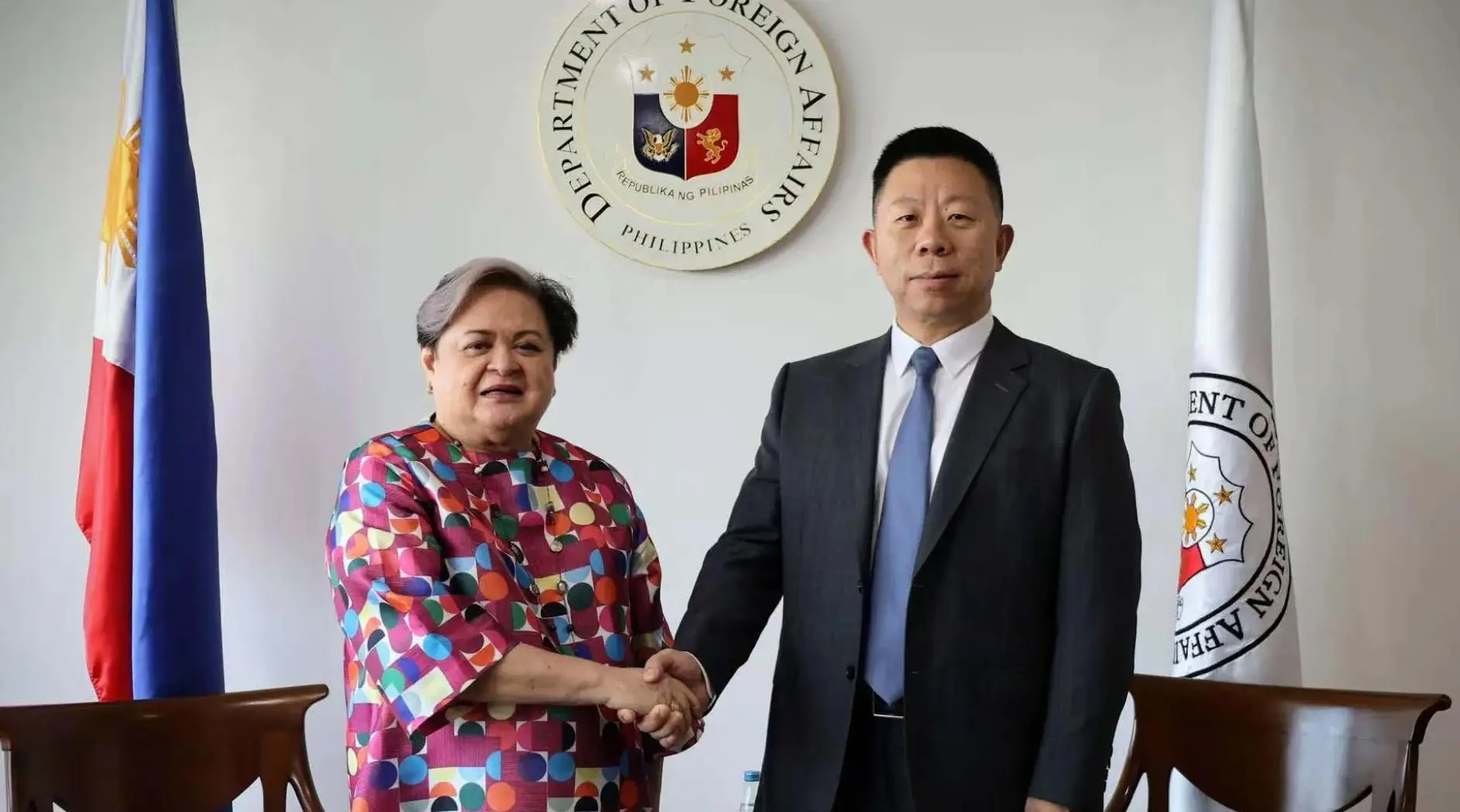
On October 19, 2026, Foreign Affairs Secretary Ma. Theresa Lazaro summoned Jing to communicate Manila’s strong objection to statements he made four days earlier about China’s military capabilities.
The Philippine government described his remarks as provocative and unacceptable, warning that such language could worsen relations between the two countries.
The dispute subsequently expanded beyond the original statement. Several Philippine lawmakers demanded stronger diplomatic measures, the Chinese Embassy publicly challenged its critics, and the DFA issued another warning on October 22 over the embassy’s social media conduct.
Despite the escalating exchange, President Ferdinand Marcos Jr.’s administration has maintained that dialogue remains its preferred approach.
As of October 25, the ambassador has not been expelled, and the Philippines has not announced a decision to declare him persona non grata.
What Did Chinese Ambassador Jing Quan Actually Say?
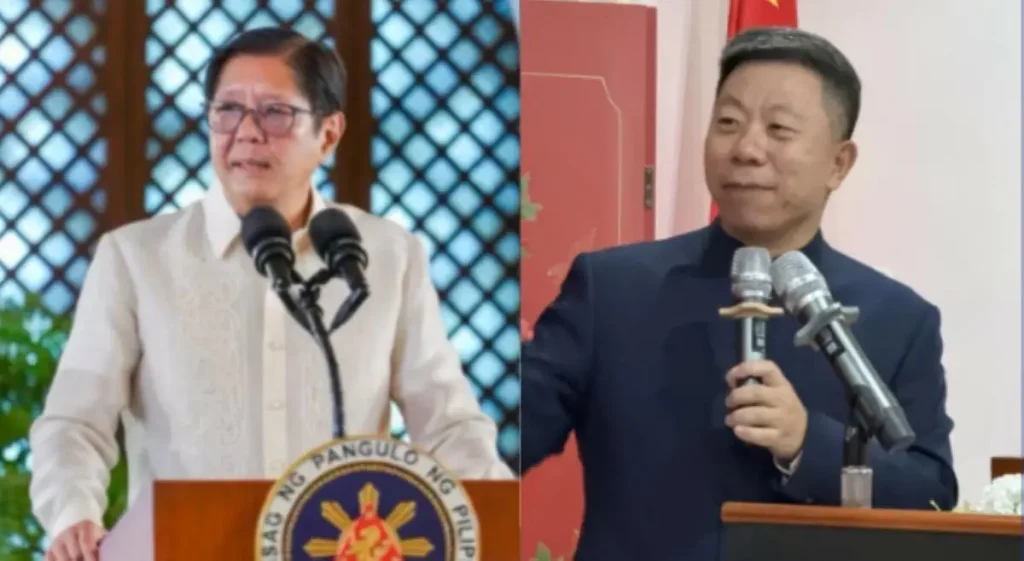
The controversy began on October 15, when Ambassador Jing spoke to reporters during an event in Quezon City.
His remarks came amid disagreements between Manila and Beijing over security, sovereignty and their respective conduct in the South China Sea.
Jing criticized Defense Secretary Gilberto Teodoro Jr.’s characterization of China as a regional troublemaker.
He then referred to China’s military strength, saying that Beijing could easily win if it chose to use force against the Philippines.
However, the ambassador also said China would not choose force and preferred peace.
This distinction matters.
The ambassador’s statement combined an assertion of military superiority with an assurance that China did not intend to resort to force.
Philippine officials interpreted the reference to an easily won confrontation as threatening. The Chinese side maintained that its message had been misrepresented or taken out of context.
Neither interpretation should be confused with a verified announcement that China intended to launch a military attack.
Why Did President Marcos Consider the Statement Threatening?
On October 16, President Marcos responded to the controversy during the Philippine Coast Guard’s anniversary activities.
He said the remarks sounded like a threat and were inappropriate for a diplomat.
The President indicated that the statement warranted a discussion with the Chinese ambassador to clarify what he intended to communicate.
Malacañang nevertheless emphasized that the administration wanted to preserve diplomatic relations with Beijing while defending Philippine interests in the West Philippine Sea.
This approach reflected two objectives: objecting to language the government considered intimidating and avoiding an unnecessary breakdown in communication.
The Chinese Embassy initially welcomed the prospect of direct discussions.
October 19: DFA Formally Summons Ambassador Jing Quan
The controversy moved into formal diplomatic channels on October 19.
Foreign Affairs Secretary Ma. Theresa Lazaro summoned Jing to convey the Philippines’ serious concern and strong objection to his public statements.
According to the DFA, Lazaro told the ambassador that his remarks were provocative and unacceptable and undermined efforts to build understanding between the two countries.
The department also objected to foreign diplomats publicly criticizing or taunting Philippine officials and legislators carrying out their constitutional responsibilities.
The DFA emphasized that Philippine democracy protects freedom of expression and differing political views.
It maintained that foreign diplomatic missions should not attempt to intimidate elected officials exercising their mandates.
Was this a formal diplomatic protest?
Yes.
Summoning an ambassador to the foreign ministry is a recognized diplomatic mechanism used to communicate an official government’s objection, demand clarification or express concern.
It is more formal than criticism delivered through a press conference or social media statement.
However, a diplomatic summons does not automatically mean that the ambassador is being expelled or that diplomatic relations are being severed.
The October 19 meeting established Manila’s objection through an official diplomatic channel.
Did the DFA threaten further action?
The DFA stated that it reserved the right to take additional diplomatic action if necessary.
At the same time, it said communication with China would remain open, particularly in areas where cooperation could continue.
This combination of protest and engagement became central to the Philippine government’s response.
China Rejects the Philippine Interpretation
Beijing and the Chinese Embassy disputed the way Jing’s remarks were characterized.
The Chinese side argued that the ambassador’s comments had been selectively quoted and overinterpreted.
It emphasized that Jing had expressly said China preferred peace and did not intend to choose force.
China also criticized Philippine political figures who had called for the ambassador’s removal.
From Beijing’s perspective, the controversy was being intensified by public criticism of China and statements by Philippine officials.
From Manila’s perspective, the ambassador’s military comparison was inappropriate because it came from a foreign diplomat serving in a country already involved in maritime disputes with Beijing.
The disagreement therefore concerns both the meaning of Jing’s original remarks and the acceptable boundaries of diplomatic speech.
Lawmakers Call for Ambassador Jing to Be Declared Persona Non Grata
The controversy prompted calls from several Philippine lawmakers for stronger action.
Senator Risa Hontiveros filed Senate Resolution No. 746, urging President Marcos to declare Jing persona non grata or request his recall.
Senator Erwin Tulfo also pursued a resolution seeking diplomatic action.
Senator JV Ejercito publicly defended calls for the ambassador’s removal, citing the treatment of Filipino personnel and fishermen during maritime confrontations.
Their position was that the ambassador’s remarks were incompatible with the responsibilities of a diplomat accredited to the Philippines.
Other political figures questioned whether expulsion would help resolve the dispute.
The Marcos administration has not adopted the lawmakers’ proposed expulsion.
What does persona non grata mean?
Persona non grata is a diplomatic designation meaning that a foreign diplomat is no longer acceptable to the receiving state.
Under Article 9 of the Vienna Convention on Diplomatic Relations, a receiving country may notify the sending country that a diplomatic representative is persona non grata without having to explain its decision.
The sending country is then expected to recall the diplomat or terminate the person’s functions at the mission.
If it fails to do so within a reasonable period, the receiving state may refuse to recognize that person as a member of the diplomatic mission.
Declaring an ambassador persona non grata is therefore considerably more serious than summoning the ambassador to express an objection.
Can the Senate expel a foreign ambassador?
The Senate can debate the issue, pass resolutions and urge the executive branch to act.
But a Senate resolution calling for an ambassador’s expulsion does not itself remove the diplomat.
The decision to take such diplomatic action belongs to the government through its foreign-relations authorities.
Chinese Embassy Challenges Philippine Lawmakers
Rather than ending with the October 19 summons, the dispute continued through a series of social media exchanges.
The Chinese Embassy challenged lawmakers discussing Jing’s possible expulsion.
It also publicly criticized Philippine Coast Guard spokesperson Rear Admiral Jay Tarriela and lawmakers who had questioned the ambassador’s statements.
Some embassy posts drew attention for their confrontational language, including responses directed at legislators calling for Jing’s recall.
The embassy argued that Philippine politicians were escalating tensions and mischaracterizing China’s position.
Philippine officials and legislators, in turn, accused the embassy of acting in a manner inconsistent with diplomatic restraint.
The exchanges brought a new dimension to the dispute: whether official diplomatic missions should use social media to confront elected representatives of their host country.
October 22: DFA Issues Another Warning Over Chinese Embassy Posts
On October 22, the Department of Foreign Affairs publicly criticized the Chinese Embassy’s recent social media statements.
The DFA described their tone as escalatory and undiplomatic.
It said the posts weakened mutual trust and complicated efforts to stabilize relations between Manila and Beijing.
The department reminded foreign diplomats accredited to the Philippines that their public statements should reflect the responsibilities of diplomatic representation.
It also reiterated that it could take further diplomatic action if necessary.
Why is this a significant development?
The October 22 warning showed that the controversy had not been resolved by the October 19 summons.
The government’s objection had expanded from one ambassador’s remarks to the wider conduct of the Chinese diplomatic mission.
The DFA was therefore addressing not only the original reference to military force but also the embassy’s subsequent public communications.
However, the department still stopped short of announcing the ambassador’s expulsion.
Philippines Reaffirms Its One China Policy
An important part of the DFA’s October 22 statement concerned the Philippines’ position on Taiwan.
The department reaffirmed the country’s adherence to the One China Policy, based on the 1975 Philippines-China Joint Communiqué.
It reiterated the Philippine government’s recognition of the People’s Republic of China as the sole legal government of China.
The clarification was relevant because the broader diplomatic dispute had also involved Chinese objections to statements and activities connected to Taiwan.
Reaffirming the policy signaled that Manila was not announcing a change in its formal diplomatic recognition of Beijing.
At the same time, the Philippines maintained its objections to the ambassador’s remarks and the embassy’s public conduct.
These positions are not mutually exclusive: a country can maintain diplomatic recognition and cooperation while formally protesting specific actions by another government.
Why Marcos Has Not Expelled the Chinese Ambassador
Malacañang has urged caution over proposals to remove Jing from the Philippines.
Palace Press Officer Claire Castro indicated that the administration wanted to avoid unnecessary damage to bilateral relations.
The Palace also raised concerns about possible consequences for Filipinos living and working in China.
This reflects a broader consideration in foreign policy.
A decision to expel an ambassador can lead to retaliatory diplomatic measures, including the possible removal of the receiving country’s own ambassador.
It can also make bilateral negotiations more difficult.
Those outcomes are possible diplomatic consequences, not confirmed actions that China has decided to take.
The administration’s current approach has been to formally object, keep communication channels open and retain the option of further measures.
Why the West Philippine Sea Dispute Makes the Remarks More Sensitive
The diplomatic controversy cannot be separated from the longstanding maritime dispute between the Philippines and China.
Beijing claims extensive areas of the South China Sea, including waters that overlap with areas where the Philippines asserts sovereign rights under international law.
Philippine and Chinese vessels have repeatedly confronted one another in disputed maritime areas.
These incidents have involved competing accusations about dangerous maneuvers, interference with missions and the lawful exercise of maritime rights.
For the Philippines, maritime access affects national security, fisheries, energy resources and the ability of government vessels to carry out lawful activities.
For China, the dispute involves its own territorial and maritime claims, which Beijing continues to assert.
These competing positions help explain why references to military force are especially sensitive.
What did the 2016 South China Sea arbitration decide?
In July 2016, an arbitral tribunal constituted under the United Nations Convention on the Law of the Sea issued an award in the case brought by the Philippines against China.
The tribunal found that China’s claims to historic rights within the nine-dash line, insofar as they exceeded rights permitted under the convention, had no lawful basis.
The award also addressed the legal status of certain maritime features and activities affecting Philippine maritime rights.
The tribunal did not decide sovereignty over land territories.
China rejected the proceedings and the award and has continued to dispute its applicability.
The Philippines maintains that the award is final and binding under the convention.
The arbitration remains an important legal reference point for Manila’s position in the West Philippine Sea.
Could the Dispute Affect Philippine-China Relations?
The immediate effect has been a deterioration in diplomatic messaging.
Whether the dispute produces longer-term consequences will depend on decisions by both governments.
Several areas deserve attention.
1. Maritime negotiations
The Philippines and China continue to have reasons to communicate about incidents at sea, operational arrangements and the prevention of dangerous encounters.
A more confrontational diplomatic environment could complicate those discussions.
2. Security cooperation
The Philippines has expanded defense cooperation with the United States and other security partners.
China has criticized aspects of that cooperation, while Manila maintains that its defense relationships are sovereign policy decisions.
The diplomatic controversy adds another point of disagreement to an already sensitive security environment.
3. Trade, investment and tourism
China is an important economic partner of the Philippines.
Diplomatic disputes do not automatically result in trade restrictions or economic retaliation.
Any claims about resulting investment losses, tourism declines or sanctions would require separate evidence.
4. Overseas Filipinos
The Palace has raised concerns about the possible impact of escalating diplomatic measures on Filipinos in China.
However, no specific retaliatory policy against Filipino residents or workers has been established by the developments described in this article.
5. Public confidence in diplomatic institutions
The controversy has also raised questions about how governments and embassies communicate during disagreements.
Formal diplomacy, public statements and social media exchanges can each influence how a dispute develops.
Timeline: Chinese Ambassador Jing Quan Controversy
| Date | Development |
|---|---|
| October 15, 2026 | Jing says China could easily win if it chose to use force, while also saying Beijing prefers peace |
| October 16 | Marcos describes the remarks as sounding threatening and seeks clarification |
| October 17–18 | Chinese Embassy challenges criticism and calls for expulsion |
| October 19 | Foreign Affairs Secretary Theresa Lazaro formally summons Jing and communicates the Philippine objection |
| October 20–21 | Lawmakers continue debating a persona non grata declaration; the embassy responds publicly |
| October 22 | DFA rebukes the embassy’s social media statements and warns that further diplomatic action remains possible |
| October 25 | The dispute remains unresolved publicly; no confirmed expulsion has been announced |
Verified Facts, Disputed Claims and Unconfirmed Outcomes
It is important to distinguish what has actually happened from political interpretations and possible future actions.
Verified developments
- Ambassador Jing made public remarks comparing China’s military capabilities with those of the Philippines.
- His remarks also included a statement that China preferred peace.
- President Marcos publicly questioned the diplomatic appropriateness of the comments.
- Secretary Lazaro formally summoned Jing on October 19.
- The DFA conveyed the Philippines’ objection and reserved the right to take further action.
- Philippine lawmakers proposed stronger diplomatic measures.
- The DFA issued another warning on October 22 concerning the embassy’s social media statements.
Disputed interpretations
- Philippine officials characterized the military comparison as threatening or intimidating.
- The Chinese side argued that the remarks were misinterpreted and that the ambassador had explicitly rejected the use of force.
- Both sides accused the other of contributing to the deterioration in public diplomatic exchanges.
Not established as of October 25
- That China has decided to use military force against the Philippines.
- That Jing has been declared persona non grata.
- That the ambassador has been expelled.
- That the Philippines and China have severed diplomatic relations.
- That either government has imposed new economic sanctions as a direct consequence of the controversy.
What Could Happen Next?
There are several possible diplomatic paths, although none should be treated as a confirmed government decision.
Continued dialogue: The DFA and Chinese Embassy could use established diplomatic channels to clarify positions and reduce public confrontation.
Additional diplomatic protest: Manila could issue further formal objections if new incidents or statements arise.
Request for recall: The Philippine government could ask Beijing to replace its ambassador.
Persona non grata declaration: The Philippines could formally notify China that Jing is no longer acceptable as its diplomatic representative.
Continued public disagreement: Officials and diplomats could maintain their positions without taking more consequential formal action.
The most important indicators will be official DFA announcements, statements from Malacañang, communications from China’s Ministry of Foreign Affairs and any formal changes in diplomatic representation.
Frequently Asked Questions
Why did the Philippines summon Chinese Ambassador Jing Quan?
The DFA summoned him on October 19 to formally object to remarks about China’s ability to prevail in a military confrontation with the Philippines.
What did Jing Quan say?
He asserted that China could easily win if it chose to use force, but also said China would not choose force and preferred peace.
Has the Chinese ambassador been expelled?
No confirmed expulsion had been announced as of October 25, 2026.
Who summoned the ambassador?
Foreign Affairs Secretary Ma. Theresa Lazaro summoned him on behalf of the Philippine government.
Why do some senators want him declared persona non grata?
They consider his remarks inappropriate and threatening and argue that a stronger diplomatic response is necessary.
Does persona non grata mean diplomatic relations are over?
Not necessarily. Declaring an individual diplomat persona non grata does not automatically terminate diplomatic relations between two countries.
Did China threaten to invade the Philippines?
Jing’s remarks were interpreted by Philippine officials as threatening. However, the statement was not a verified announcement of an invasion plan, and the ambassador also said China preferred not to use force.
What is the latest DFA response?
On October 22, the DFA criticized the Chinese Embassy’s social media statements and reiterated that further diplomatic action remained an option.
Conclusion: A Diplomatic Protest With Wider Implications
The formal summons of Chinese Ambassador Jing Quan represents a significant development in the Philippines’ diplomatic response to remarks it considers inappropriate and threatening.
The October 22 warning shows that the dispute has extended beyond the original statement into a broader disagreement about diplomatic conduct and public communications.
Yet the Marcos administration has so far chosen not to expel the ambassador, maintaining that dialogue remains important even when relations are strained.
For the Philippines, the challenge is to defend its maritime rights and the independence of its public institutions while preserving channels that can help prevent misunderstandings and dangerous incidents.
For China, the dispute presents a corresponding test of how its diplomatic representatives communicate Beijing’s positions to a neighboring country with which it has unresolved maritime disagreements.
The next significant development will be an official diplomatic action—not merely another exchange of criticism online.
The Daily Caffeine will continue monitoring the DFA, Malacañang and Chinese government statements for verified developments.
Sources and References
- Philippine News Agency — DFA summons Chinese envoy, October 19, 2026
- Reuters — Philippines summons China’s envoy over remarks, October 19, 2026
- GMA News — DFA summons Chinese Ambassador Jing Quan, October 19, 2026
- Associated Press — Philippines summons Chinese ambassador, October 19, 2026
- GMA News — Marcos seeks discussion with Chinese envoy, October 16, 2026
- Philstar — DFA criticizes Chinese Embassy’s posts, October 22, 2026
- BusinessMirror — DFA issues renewed warning, October 22, 2026
- Permanent Court of Arbitration — South China Sea Arbitration
- United Nations — Vienna Convention on Diplomatic Relations
Editorial note: This report distinguishes official government actions from allegations, diplomatic interpretations and possible future measures. Updated October 25, 2026.