The problem right now isn’t just conflict—it’s confusion. One side says talks are working. The other says there are no talks at all. That gap tells you everything about how fragile the situation is.
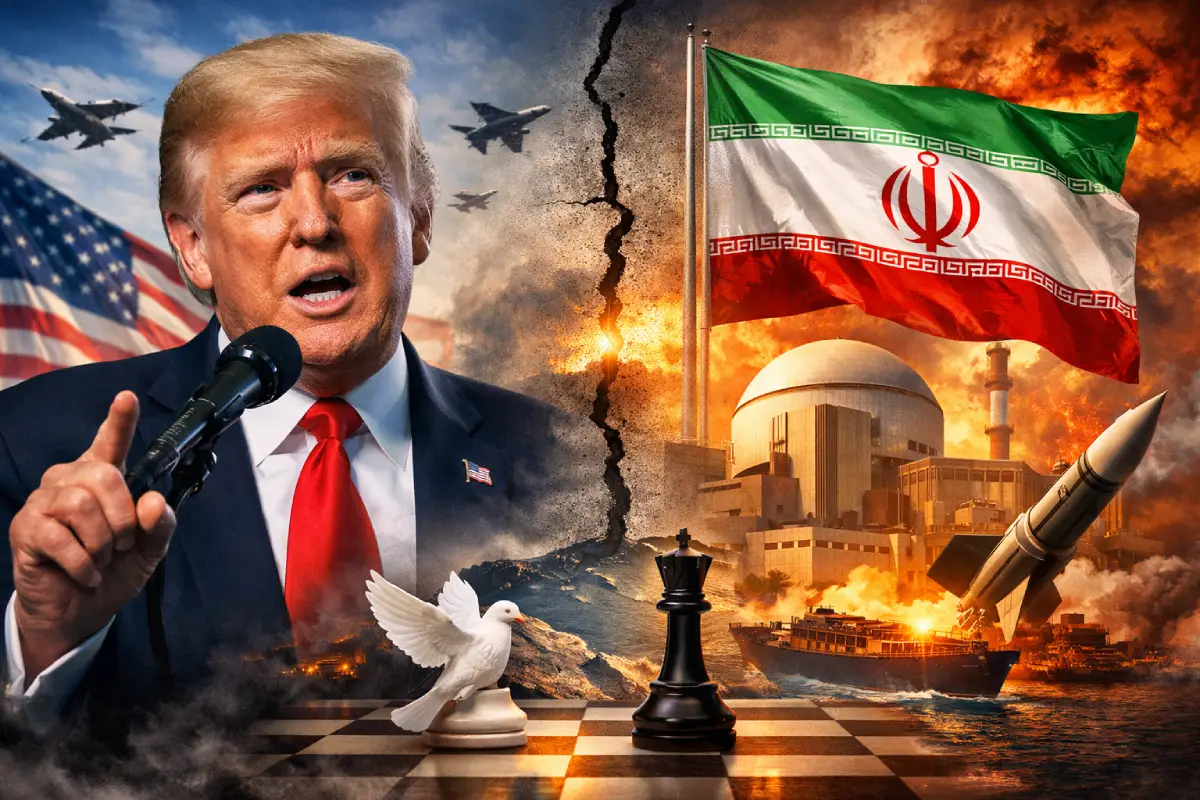
Around 3:00 PM – 5:00 PM (ET), March 22, 2026 , President Donald Trump stepped in front of the media and claimed the United States and Iran had made real progress. He described the discussions as strong, productive, and close to reaching something meaningful. At the same time, Iran came out and denied those talks, saying there were no direct negotiations and no such progress.
So what’s really happening with the Trump-Iran Negotiations?
Both things can be true at once. There are likely conversations happening, but not in the clean, formal way people imagine. These are indirect talks, passed through intermediaries, shaped by pressure, and carefully managed in public. Each side is saying what benefits them most right now.
The United States is trying to show control. By announcing “progress,” it sends a message to the world that it’s managing the situation and steering things toward a resolution. It also calms global markets, which react fast to any hint of war or peace. At the same time, it puts pressure on Iran. If the U.S. says talks are close, it frames Iran as the side that might walk away from a potential deal.
Iran, on the other hand, has its own audience to think about. Admitting negotiations too early can make it look like they are bending under pressure. So they deny it. They keep their position firm. That gives them leverage and protects their image internally.
This is not new in global politics. Public statements are part of the negotiation itself.
What made the situation more serious was the decision to pause planned U.S. strikes on Iranian energy infrastructure. That move matters. It shows that despite all the tension, Washington is still looking for a way to avoid pushing things into full conflict. A pause like that isn’t given for free. It’s a signal that something is being tested behind the scenes.
But the real story isn’t the headlines. It’s what both sides actually want, because that’s where things get complicated.
From the U.S. perspective, the biggest concern hasn’t changed for years. It’s Iran’s nuclear program. Washington wants to slow it down, limit it, and put it under strict control. The fear is simple: once a country gets too close to building a nuclear weapon, everything changes. Power shifts. Risks increase. And reversing that becomes almost impossible.
So any deal from the U.S. side has to include restrictions. Not vague promises, but real limits—how much uranium Iran can enrich, how fast it can develop, and how closely it can be monitored. Without that, there’s no deal.
At the same time, the U.S. is thinking beyond nuclear issues. Geography plays a huge role here, especially with the Strait of Hormuz. This narrow stretch of water carries a massive share of the world’s oil. If that route gets disrupted, oil prices don’t just go up—they spike fast, and the impact hits globally.
That includes everyday people. Fuel costs rise, transport becomes more expensive, and goods follow. So when the U.S. pushes for stability in that region, it’s not just about politics. It’s about keeping the global economy from shaking.
There’s also the wider issue of influence. Iran has built strong connections across the Middle East, supporting different groups and expanding its reach. The U.S. wants that scaled back. Not necessarily erased overnight, but reduced enough to ease tensions in the region. That’s a hard ask because it cuts into Iran’s long-term strategy.
And then there’s the reality no one says out loud but everyone understands. Avoiding war is a priority. A full conflict with Iran wouldn’t be quick or clean. It would drag in other countries, disrupt trade, and stretch resources. Even for a military power, the cost would be high. So while the U.S. applies pressure, it also keeps the door open for a deal.
On the other side, Iran’s priorities are just as strong, but they start from a different place. Their main issue isn’t nuclear restrictions—it’s sanctions. Years of economic pressure have hit hard. Oil exports have been limited, access to global markets has been restricted, and the economy has taken the strain.
For Iran, lifting those sanctions isn’t just part of a deal. It’s the point of the deal. Without economic relief, there’s no incentive to agree to anything. That’s why you’ll notice their stance stays consistent. They want real, immediate changes—not promises that stretch into the future.
There’s also the question of sovereignty. Iran doesn’t want to be seen as a country that follows orders from outside powers. That’s why even if negotiations are happening, they won’t openly admit it unless the terms are already in their favor. Image matters, especially domestically. Leaders need to show strength, not compromise under pressure.
Security is another layer. Iran has long been wary of external attempts to weaken or change its government. So any agreement has to include some level of assurance that military threats won’t continue indefinitely. Without that, trust stays low, and progress slows down.
Then there’s the issue of regional influence. Iran has spent years building its position in the Middle East. That’s not something it’s going to give up easily. Even in negotiations, it’s more likely to adjust its level of involvement rather than walk away completely. From their perspective, that influence is part of their defense strategy.
When you line all of this up, you start to see where the real tension sits. It’s not about whether both sides want a deal. They do. The problem is timing and order.
The U.S. wants Iran to scale back first—reduce nuclear activity, ease regional pressure, and prove it’s serious. Iran wants relief first—lift sanctions, ease economic pressure, and show that cooperation actually leads to something.
Both sides are waiting for the other to move.
That’s why even with talk of “progress,” nothing feels settled. Each statement, each denial, each pause in military action—it’s all part of testing how far the other side is willing to go.
The five-day pause in strikes is a good example of that. It creates a small window where things can shift. It gives room for backchannel discussions to move forward. But it’s also a countdown. If nothing comes out of it, pressure returns quickly.
Markets have already reacted. The moment news of possible negotiations came out, oil prices eased and stocks moved up. That reaction shows how much the world is watching this situation. Stability here affects everything—from energy costs to supply chains to everyday expenses.
For countries outside the conflict, including the Philippines, the impact is indirect but real. When oil stabilizes, costs stay manageable. When it spikes, everything becomes more expensive. That’s how connected the situation is.
Looking ahead, there are only a few ways this can go. The most realistic outcome is some kind of partial agreement. Something that reduces tension without solving everything. That buys time and avoids immediate escalation, but it leaves bigger issues for later.
A full agreement is possible, but it would require both sides to give up more than they’ve shown willingness to so far. That kind of deal takes time, and right now, time is limited.
The other path is the one everyone is trying to avoid. If talks break down completely, the pause ends, and military action resumes. From there, things can escalate quickly.
So where does that leave things?
Right now, this isn’t a clean negotiation heading toward a clear result. It’s a controlled standoff. Both sides are talking, but carefully. Both sides want something, but on their own terms. And both sides are trying to shape the narrative while they negotiate behind it.
The headlines make it look like confusion. But underneath, it’s strategy.