
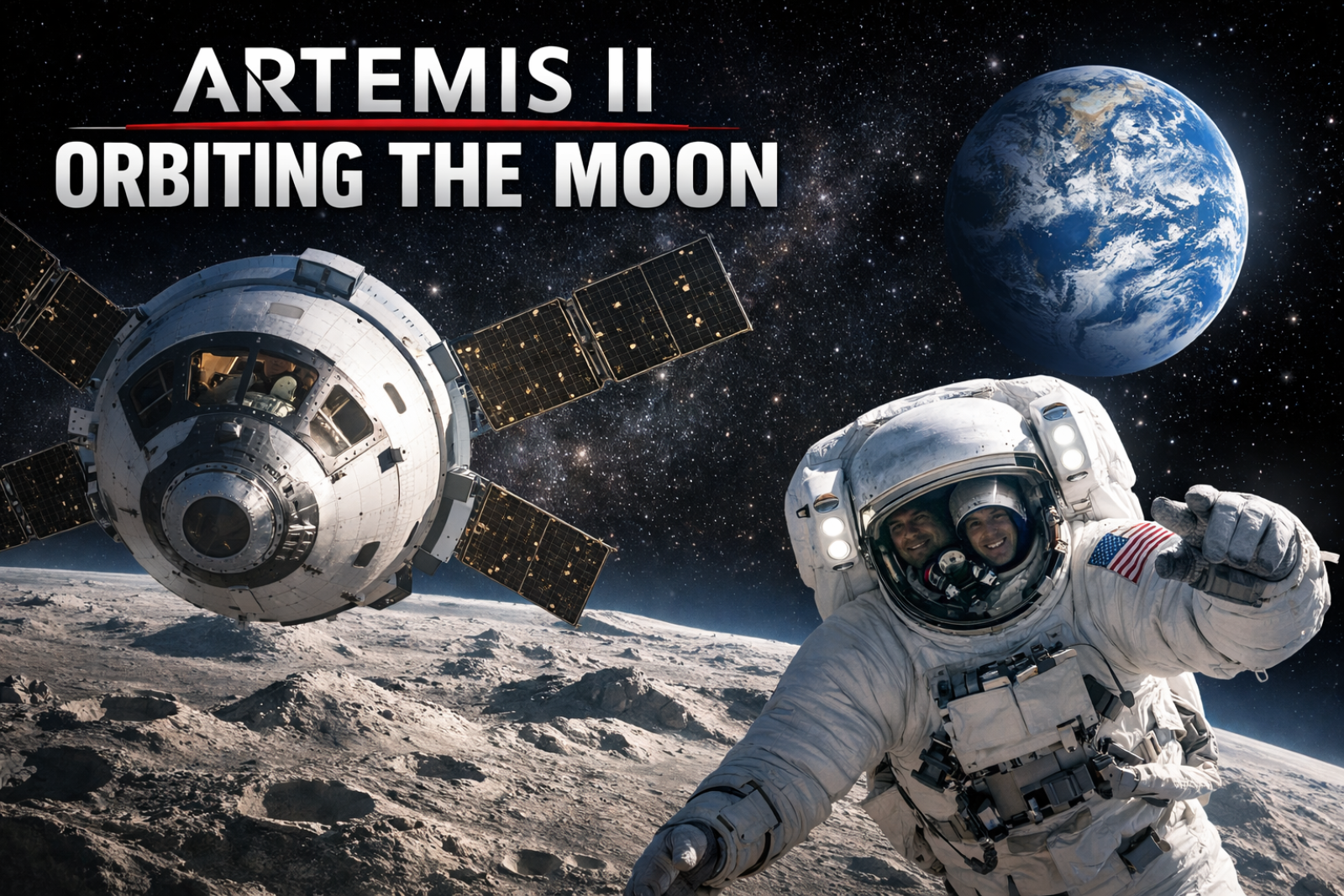
The Artemis II mission is now actively underway, with astronauts orbiting the Moon for the first time in more than five decades, marking a historic return to deep space that many experts say signals the beginning of a new era in human exploration beyond Earth’s orbit.
For the first time since the Apollo program ended in 1972, humans are no longer confined to low Earth orbit and are once again traveling through deep space, operating in an environment far more complex and unforgiving than missions conducted aboard the International Space Station, where astronauts remain protected by Earth’s magnetic field and close proximity to ground support.
Led by NASA in partnership with the Canadian Space Agency, the mission brings together international expertise in what officials describe as a critical step toward sustained human presence on the Moon and future missions to Mars, highlighting a shift from short-term exploration to long-term space infrastructure and habitation.
The four-person crew, traveling aboard the Orion spacecraft and launched by the Space Launch System (SLS), is currently conducting operations in lunar orbit, where they are testing life support systems, navigation capabilities, and communication technologies under real mission conditions, all of which are essential for ensuring the safety and success of upcoming missions that aim to land humans on the lunar surface.
NASA officials say the success of Artemis II mission will directly determine the timeline and readiness of future missions under the Artemis program, particularly Artemis III, which is planned to return humans to the Moon’s surface for the first time in over half a century, making the current mission not just a test flight, but a defining checkpoint for the future of human space travel.
Artemis II Mission Overview (Quick Facts)


NASA has outlined the core parameters of the Artemis II mission:
- Mission Type: Crewed lunar flyby
- Duration: Approximately 10 days
- Distance: Around 370,000 kilometers from Earth
- Launch Site: Kennedy Space Center
- Primary Goal: Test deep space systems with astronauts onboard
Unlike its predecessor, Artemis I—which flew without a crew—this mission will validate life support, navigation, and communication systems under real human conditions.
Meet the Artemis II Crew
Commander: Reid Wiseman
- Former Navy pilot
- ISS veteran
- Leads mission operations
Pilot: Victor Glover
- Test pilot
- First Black astronaut assigned to a lunar mission
- Responsible for spacecraft control
Mission Specialist: Christina Koch
- Longest single spaceflight by a woman
- Systems and science lead
Mission Specialist: Jeremy Hansen
- First Canadian astronaut going to the Moon
- Represents Canadian Space Agency
Why Artemis II Matters for the Future of Space Travel
The last time humans went this far was during the Apollo program.
This mission changes everything.
✔ Key Impact:
- Validates deep space human travel
- Enables Artemis III Moon landing
- Builds foundation for Mars missions
- Strengthens international space partnerships
What Happens During the Mission


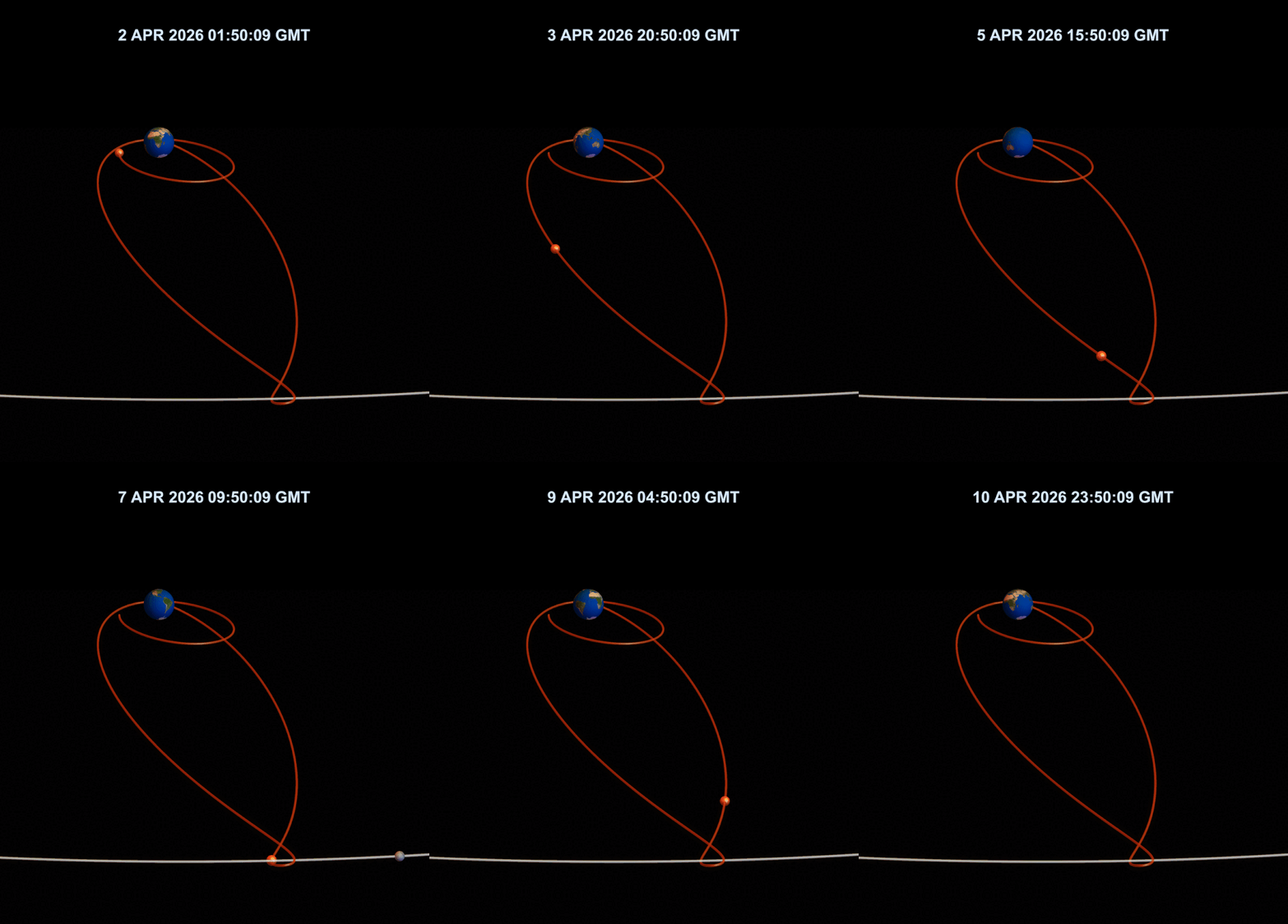
The Artemis II mission crew will:
- Launch aboard SLS
- Travel beyond Earth orbit
- Perform a lunar flyby
- Test navigation and communication systems
- Re-enter Earth’s atmosphere at high speed
This is a full stress test—with real astronauts onboard.
Life in Space: The Human Side (Yes, Even Nutella)

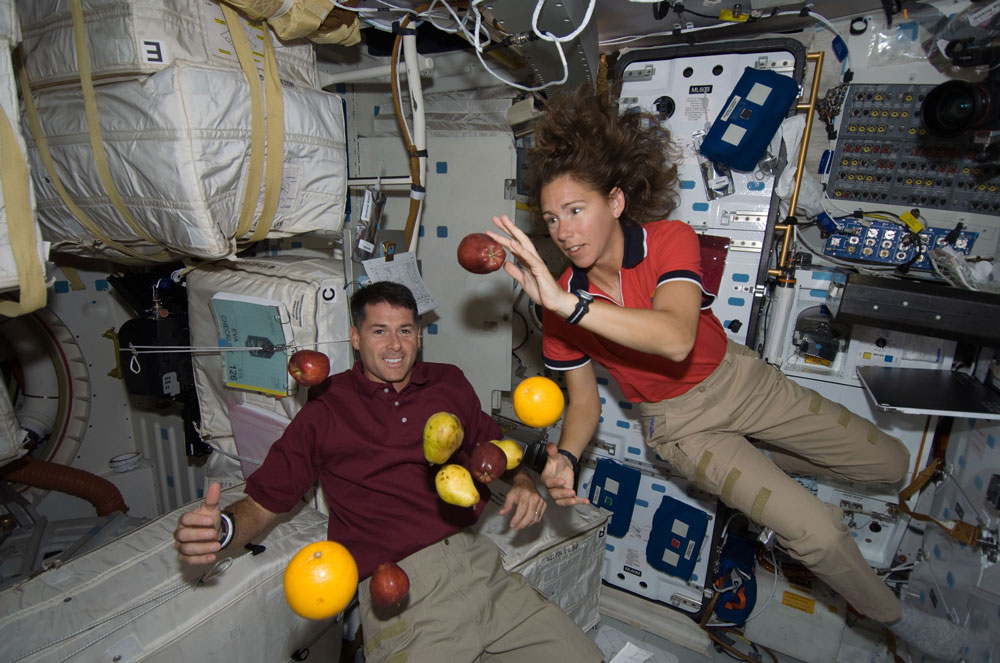
Space isn’t just engineering—it’s human.
Astronauts deal with:
- Isolation
- Confinement
- Constant pressure
Small things matter. Familiar food, jokes, and light moments help maintain mental stability.
Even something like floating food (yes—even Nutella) becomes part of the experience. On the International Space Station, astronauts already use these small moments to stay sharp and connected.
Risks of the Artemis II Mission
The problem with missions like this is simple—once you leave Earth orbit, there’s no safety net. The Artemis II mission is not routine, and every phase of it is designed to push both the spacecraft and the crew into conditions that haven’t been experienced by humans since the Apollo program.
Unlike operations aboard the International Space Station, where astronauts remain relatively close to Earth and can receive rapid support if something goes wrong, Artemis II operates hundreds of thousands of kilometers away, where immediate rescue is not an option. That distance alone changes everything.
Radiation Exposure Beyond Earth’s Magnetosphere
One of the biggest risks is radiation.
Once the spacecraft leaves Earth’s protective magnetic field, the crew is exposed to higher levels of cosmic radiation and solar particle events. Over time, this increases the risk of both short-term effects—like radiation sickness—and long-term health issues, including cancer.
Artemis II is testing how well the Orion spacecraft can shield astronauts from these conditions, especially during prolonged exposure in deep space.
System Failures With No Quick Rescue
In low Earth orbit, backup options exist. On Artemis II, they don’t.
If a critical system fails—life support, navigation, or propulsion—the crew must rely entirely on onboard redundancy and problem-solving. There is no rapid rescue mission, no quick return window without consequences.
The Orion spacecraft is designed with multiple backup systems, but Artemis II is the first real test of whether those systems can hold up under actual deep space conditions.
Extreme Reentry Heat
Coming home is one of the most dangerous parts of the mission.
The spacecraft will reenter Earth’s atmosphere at speeds far greater than typical orbital missions. This generates extreme heat that can exceed several thousand degrees Celsius.
To survive this, Orion is equipped with one of the most advanced heat shields ever built. Artemis II will test whether it performs as expected under real mission conditions—something that cannot be fully simulated on Earth.
Psychological Stress
The technical risks are only part of the story.
The crew will spend days in a confined spacecraft, far from Earth, with limited space, constant monitoring, and high-pressure responsibilities. Communication delays and the awareness of being alone in deep space can add to the mental strain.
NASA has learned from decades of human spaceflight that psychological stability is critical. Even small routines—like shared meals or brief downtime—help maintain focus and prevent fatigue-related errors.
Why These Risks Matter
Every one of these risks is intentional.
Artemis II exists to expose both the spacecraft and its crew to real deep space conditions before committing to a lunar landing. NASA needs to understand how systems behave, how astronauts respond, and where the weak points are.
Because if these risks aren’t managed now, they become failures later.
And later missions won’t just orbit the Moon—they’ll land on it, stay longer, and eventually push even farther to Mars.
What Comes After Artemis II?
The Artemis II mission is not the end goal—it is the gateway to a series of increasingly complex missions that aim to establish a long-term human presence beyond Earth.
Artemis III: The Return to the Lunar Surface
Following Artemis II, the next major step is Artemis III, which is planned to deliver the first human Moon landing since the Apollo program.
NASA has emphasized that this mission will go beyond repeating history. Artemis III is expected to land the first woman and the first person of color on the Moon, marking a shift toward a more inclusive era of space exploration.
Unlike Apollo, which focused on short visits, Artemis III is designed to support longer stays, advanced surface operations, and the testing of new technologies that will be used for future missions.
Artemis IV and Beyond: Building a Sustainable Presence
After the initial return to the Moon, NASA plans to expand its operations through Artemis IV and subsequent missions.
A key component of this phase is the development of the Lunar Gateway, a space station that will orbit the Moon and serve as a staging point for missions to the lunar surface.
The Gateway is expected to:
- Support astronaut missions to and from the Moon
- Enable longer-duration stays in lunar orbit
- Act as a hub for international collaboration
These missions will also focus on building the foundation for a long-term human presence on the Moon, including:
- Reusable landing systems
- Surface habitats
- Resource utilization, such as extracting water ice
NASA officials say this phase represents a shift from exploration to sustained operations.
The Long-Term Goal: Mars
While the Moon is the immediate focus, NASA has made it clear that the ultimate objective of the Artemis program is human exploration of Mars.
Data gathered from Artemis missions will be used to prepare for:
- Longer-duration space travel
- Deep space habitation
- Life support systems for extended missions
The Moon serves as a testing ground—close enough for support, but far enough to simulate the challenges of deep space.
FAQ
What is the Artemis II mission?
Artemis II is NASA’s first crewed mission to travel around the Moon since the Apollo program. It will test deep space systems using astronauts aboard the Orion spacecraft.
When will Artemis II launch?
NASA is targeting a launch window around 2025, though exact dates may shift depending on testing and readiness.
Who are the Artemis II crew members?
The crew includes Reid Wiseman, Victor Glover, Christina Koch, and Jeremy Hansen, representing both the U.S. and Canada.
Will Artemis II land on the Moon?
No. Artemis II is a lunar flyby mission. The Moon landing is planned for Artemis III.
Why is Artemis II important?
It validates human deep space travel systems, making future Moon landings and Mars missions possible.
How long will Artemis II last?
The mission is expected to last about 10 days from launch to splashdown.